
Interlock patios, driveways, walkways and retaining walls, designed and built by a local crew
Dreamscape Landscaping has been building interlock and hardscaping across Halton Hills since 1987. Whether it is a new driveway, a backyard patio, a front walkway and steps, or a retaining wall to tame a sloped lot, we design it, build it and stand behind it. We work throughout Georgetown, Halton Hills, Acton, Erin and Rockwood, and we also repair and relevel existing interlock that has sunk or heaved.
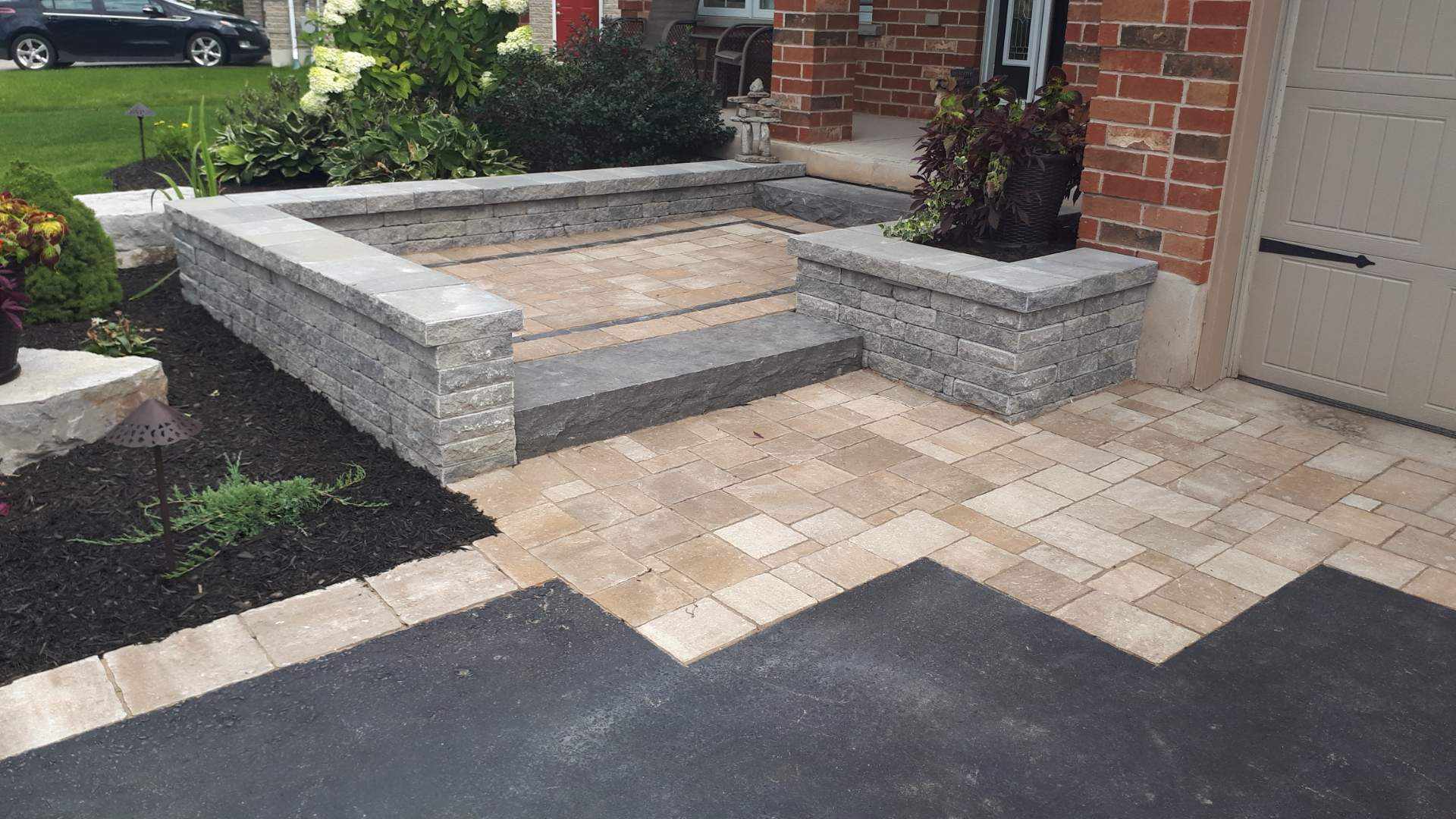
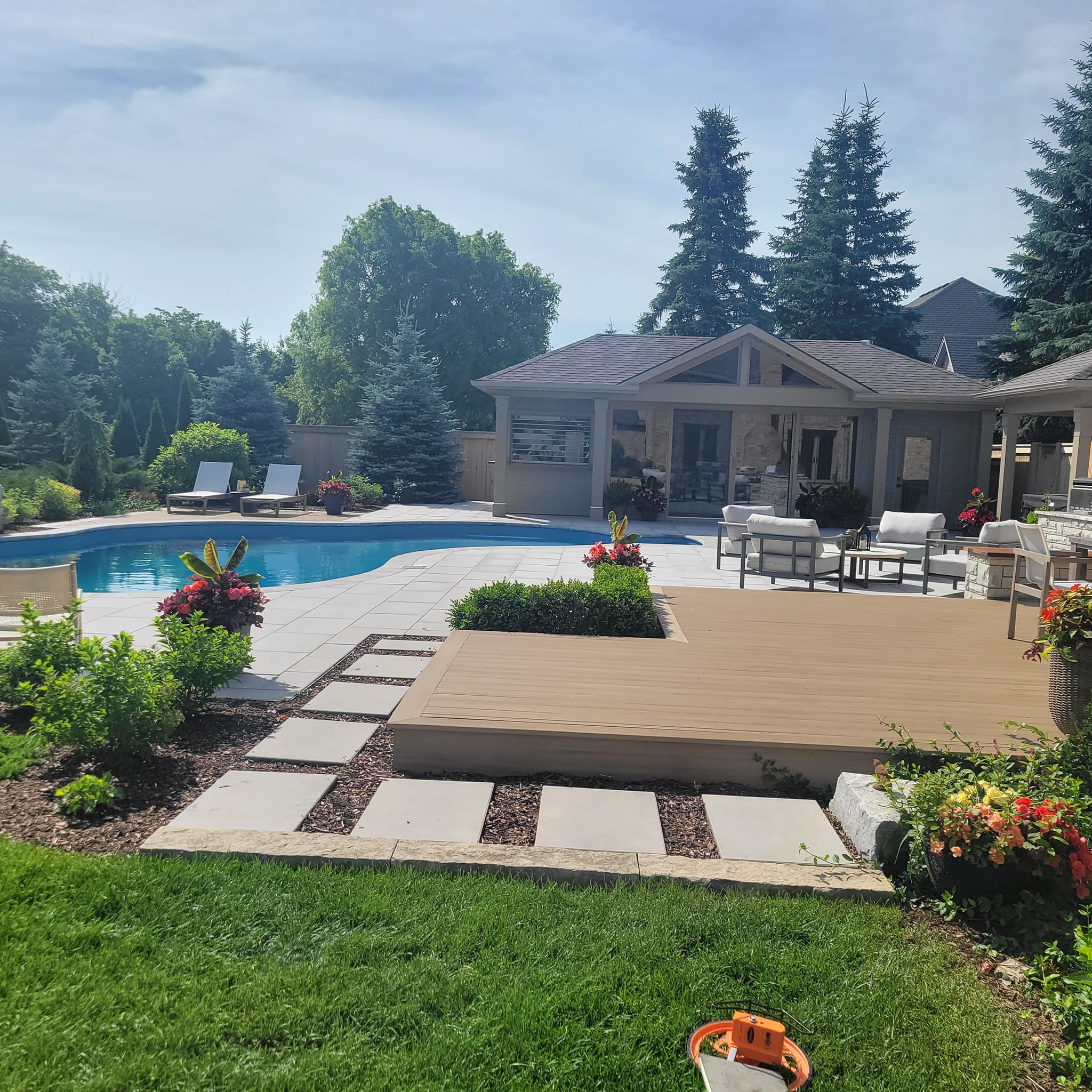
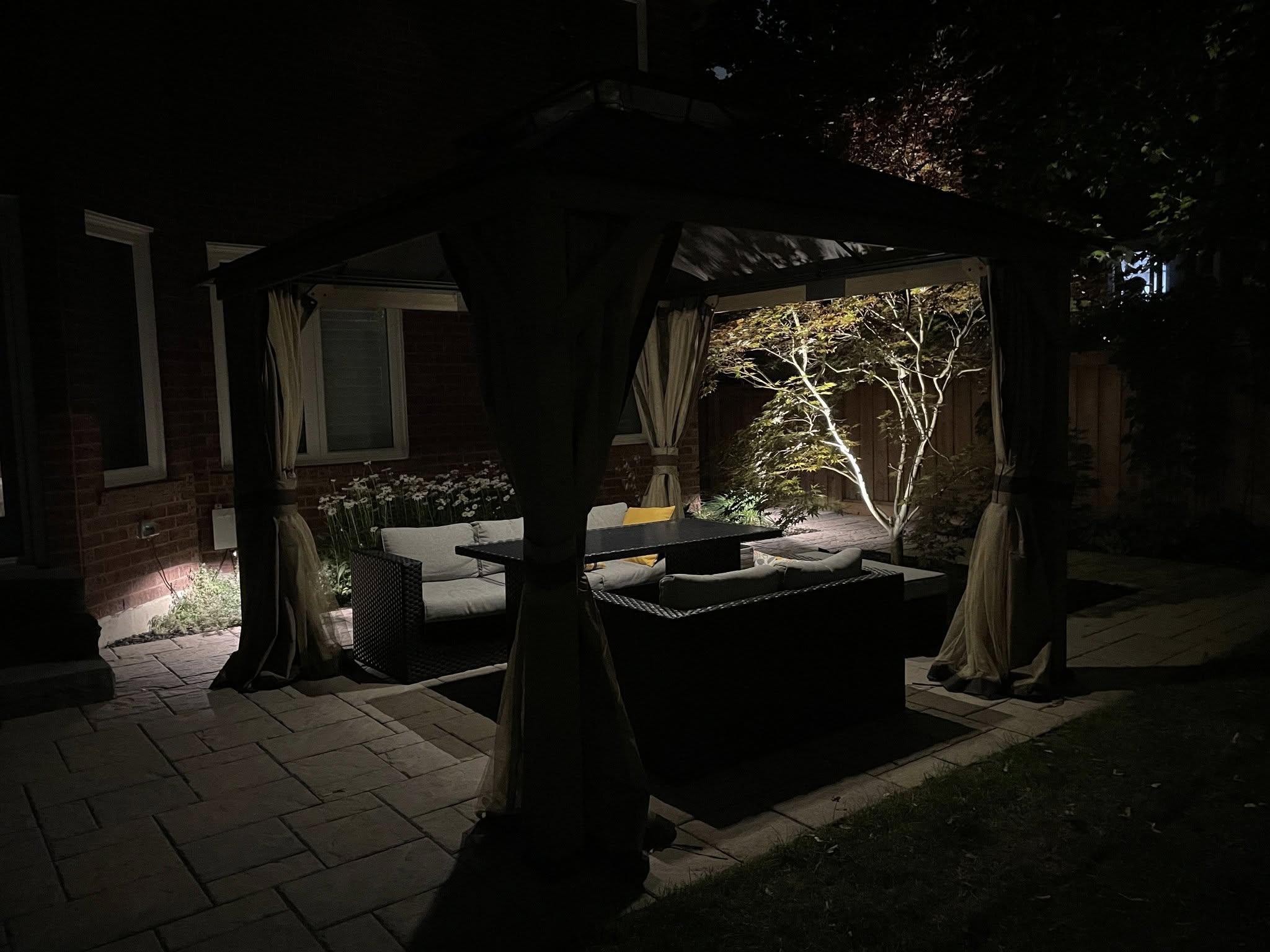
What We Build
Interlock driveways: A paver driveway has to carry the weight of a vehicle through every freeze and thaw, so it gets a deeper, heavier base than a patio. Built properly, it stays flat, sheds water and adds real curb appeal.
Patios and outdoor living areas: From a simple seating pad off the back door to a full entertaining space with steps, seat walls and lighting, we lay out the patio around how you actually use the yard.
Walkways and steps: A good front walkway guides people to the door, drains away from the house and stays safe in winter. Interlock and natural stone steps finish the entrance properly.
Retaining walls: Walls hold back a slope, create level space you can use and give planting beds some structure. See the retaining wall section below for more.
Natural stone: Flagstone and natural stone features can be used on their own or mixed with interlock for a more natural look.
Interlocking Pavers vs. Concrete
Concrete is cheaper to pour, but in our climate it tends to crack as the ground freezes and thaws, and a crack can't be patched without it showing. Interlock is made of individual units that flex slightly with ground movement, so it holds up better through Ontario winters. If a section ever does need work, the pavers are lifted, the base is fixed and the same pavers go back down.
Interlock usually costs more up front. Over 20 years or more it tends to come out ahead because it lasts longer, repairs are smaller and it keeps looking good, which matters when you go to sell.
Retaining Walls in Halton Hills
A lot of properties around here are not flat. Between the Niagara Escarpment, the Credit River valley and the rolling ground up toward Erin, retaining walls are one of the most common things we build. A well-built wall turns an awkward slope into a usable patio, lawn or garden, and keeps soil and water where they belong.
The part you don't see does most of the work: a solid footing, proper drainage stone and a drain behind the wall so water pressure doesn't build up and push it over. Taller walls, walls that change the grading, or anything near a creek or ravine can need approval from the Town of Halton Hills or the conservation authority, so we sort that out at the design stage rather than after the wall is up. For more on local permits, see our Halton Hills landscaping page.
Interlock Repair and Releveling
Sunken spots, heaving after winter, pavers that rock underfoot, weeds and ants coming up through the joints: almost every interlock problem comes back to the base or to water getting underneath. Rather than tearing everything out, we lift the area that has failed, fix the base and the drainage that caused it, relay the original pavers and finish with fresh polymeric sand. It matches the rest of the job and costs a lot less than starting over.
How We Build Interlock That Lasts
Every project starts with a look at the property: slope, drainage, soil, how the space will be used and the style of the house. From there we design the layout, pick paver colours and patterns, and plan edges and transitions so the hardscaping ties in with the rest of the landscape.
On the build, the base is everything. We dig out to the right depth for the job, install and compact a granular base in layers, set the bedding layer, lay the pavers, lock in the edges and finish the joints with polymeric sand. Grading is set so water runs away from the house and off the surface. Skip any of that and interlock starts to sink or heave within a few winters.
Interlocking in Georgetown
Most of Georgetown sits on heavy Halton clay. It holds water and moves with frost, which is exactly why so many Georgetown driveways and patios sink or heave after a few years. On clay we dig out deeper, build up a properly compacted base and make sure water has somewhere to go before a single paver goes down.
The work varies across town. Newer homes in Georgetown South often have compacted builder fill and need a driveway, walkway or backyard patio from scratch. Older homes near downtown and in established neighbourhoods tend to need walkways and steps reworked around mature trees, where careful digging protects the roots. Lots that back onto the Credit River or Silver Creek can fall under Credit Valley Conservation, which matters for retaining walls and grading. If you are thinking about widening a driveway, the Town has rules on driveway width and front yards, so we check those before we design. More on working in Georgetown on our Georgetown landscaping page.
Interlocking in Halton Hills: Acton, Glen Williams and Limehouse
Outside Georgetown, the ground changes quickly. Around Acton and Limehouse you can hit limestone close to the surface, so excavation for a patio or driveway takes more planning and sometimes rock removal. Glen Williams and the other valley hamlets have plenty of sloped lots where a retaining wall is what makes a patio possible in the first place.
Rural properties bring longer driveways, larger patios and bigger grade changes. Parts of the municipality also sit within the Niagara Escarpment and Greenbelt planning areas, which can add an approval step for some work. We are based in Acton, so this is the ground we know best. See our Acton, Limehouse and Halton Hills pages for more.
Interlock in Erin and Rockwood
In Erin the soil is more often gravelly loam than heavy clay, so drainage tends to be easier, but many properties are on wells and septic systems. Heavy equipment and new driveway routes have to stay clear of the septic bed, and grading has to keep water away from the well. We plan access and grading around both before anything is dug. Depending on which side of the watershed you are on, conservation review falls to Credit Valley Conservation or the Grand River Conservation Authority. More on our Erin landscaping page.
Rockwood sits along the Eramosa River in the Grand River watershed, with limestone close to the surface in many spots, so shallow rock and GRCA rules near the river both come into play for patios and retaining walls. Natural stone fits right in there. See our Rockwood landscaping page.
Hardscaping That Works With the Rest of the Yard
Interlock looks best when it is planned with everything around it. Retaining walls create level space and planting beds, landscape lighting shows off the patio and makes steps safe at night, garden plantings soften the hard edges, and a fire feature or water feature gives the space a focal point. If you are redoing more than the patio, have a look at our backyard renovations and landscape design pages, or browse our projects.
Ready to talk about your project? Call us at 647-234-7907 or request a free quote.
Interlocking and Hardscaping FAQs
Are interlocking pavers better than concrete?
For most homes around here, yes. Interlock flexes with freeze-thaw movement instead of cracking, a damaged paver can be lifted and replaced on its own, and you get far more choice in colour and pattern. Concrete is cheaper up front but tends to crack in Ontario winters and can't be patched invisibly.
How long do interlocking pavers last?
Professionally installed interlock commonly lasts 20 to 25 years or more in Ontario. The pavers themselves rarely fail. What decides the lifespan is the base underneath and how well water drains away from it.
What are interlocking pavers best for?
Patios, driveways, walkways, steps, pool decks and entertaining areas. Built on the right base, interlock handles both foot traffic and vehicles, and it can be matched to almost any style of home.
How much do interlocking pavers cost compared to concrete?
Interlock usually costs more than concrete to install, but it tends to outlast it and repairs are cheaper because you only replace the pavers that need it. Every property is different, so we give a written quote after seeing the site.
Do interlocking pavers require maintenance?
Very little. A sweep, an occasional wash and topping up the polymeric sand in the joints keeps weeds and ants down. If a section ever settles, it can be lifted, rebased and relaid without touching the rest.
Can you fix sunken or heaving interlock?
Yes. Most sinking or heaving comes from a thin base or water getting under the pavers. We lift the affected area, correct the base and the drainage that caused it, and relay the original pavers, so it matches the rest of the patio or driveway.
Do I need a permit for a retaining wall in Halton Hills?
Small garden walls usually do not. Taller walls, walls that change grading or drainage, and any work near a creek, ravine or other regulated area can need approval from the Town of Halton Hills or the conservation authority. We check this at the design stage so your wall is built onside.
Is interlock a good choice on clay soil?
Yes, as long as the base is built for it. Clay holds water and moves with frost, so the job is to dig out deep enough, install a properly compacted granular base and give water somewhere to go. Done that way, interlock on Halton clay stays flat for decades.